
Why India's Most Demanding Architects Are Switching from HPL to Thermolaminate
Why India's Most Demanding Architects Are Switching from HPL to Thermolaminate
Walk into any architectural practice in India and ask about the challenges of surface specification. Within three minutes, you will hear the same complaints: brown lines at cut edges, chipped corners, edge bands that never quite match, and clients who call eighteen months after handover because the kitchen laminate is already fading. These are not installation failures. They are material limitations inherent in the way High Pressure Laminates (HPL) are manufactured. And for the first time in India's laminate market, there is a material category that solves all of them.
What Is Thermolaminate?
Thermolaminate is a next-generation decorative surface material made from Acrylic Vinyl Chloride (AVC) Copolymer. This base material behaves fundamentally differently from the phenol-formaldehyde resin core of standard HPL. ONEDTL Thermolaminate, manufactured by DesignTree at their 20-acre facility in Mundra, Gujarat, is India's first domestically manufactured thermolaminate at this specification and one of only two manufacturers producing it at this scale globally.
The Four Problems with Standard HPL
Every HPL laminate has a brown kraft paper core. When cut, this core is exposed as a brown line requiring edge banding that rarely achieves a perfect colour match.
HPL is rigid. Applying it to 90° edges requires aggressive edge banding or accepting the risk of chipping under normal use.
HPL's surface does not allow for scratch repair. A key scratch from Day 1 remains visible on Day 3,650.
Standard HPL does not carry written anti-fade warranties. Many laminates show a perceptible colour shift within 3–5 years in well-lit environments. These are just a few of the 10 common problems with HPL that architects deal with every day.
How ONEDTL Thermolaminate Addresses Each Problem
ONEDTL has unicore construction — pigments mixed evenly through the entire material. Cut it anywhere. The edge colour is identical to the face. No edge banding required.
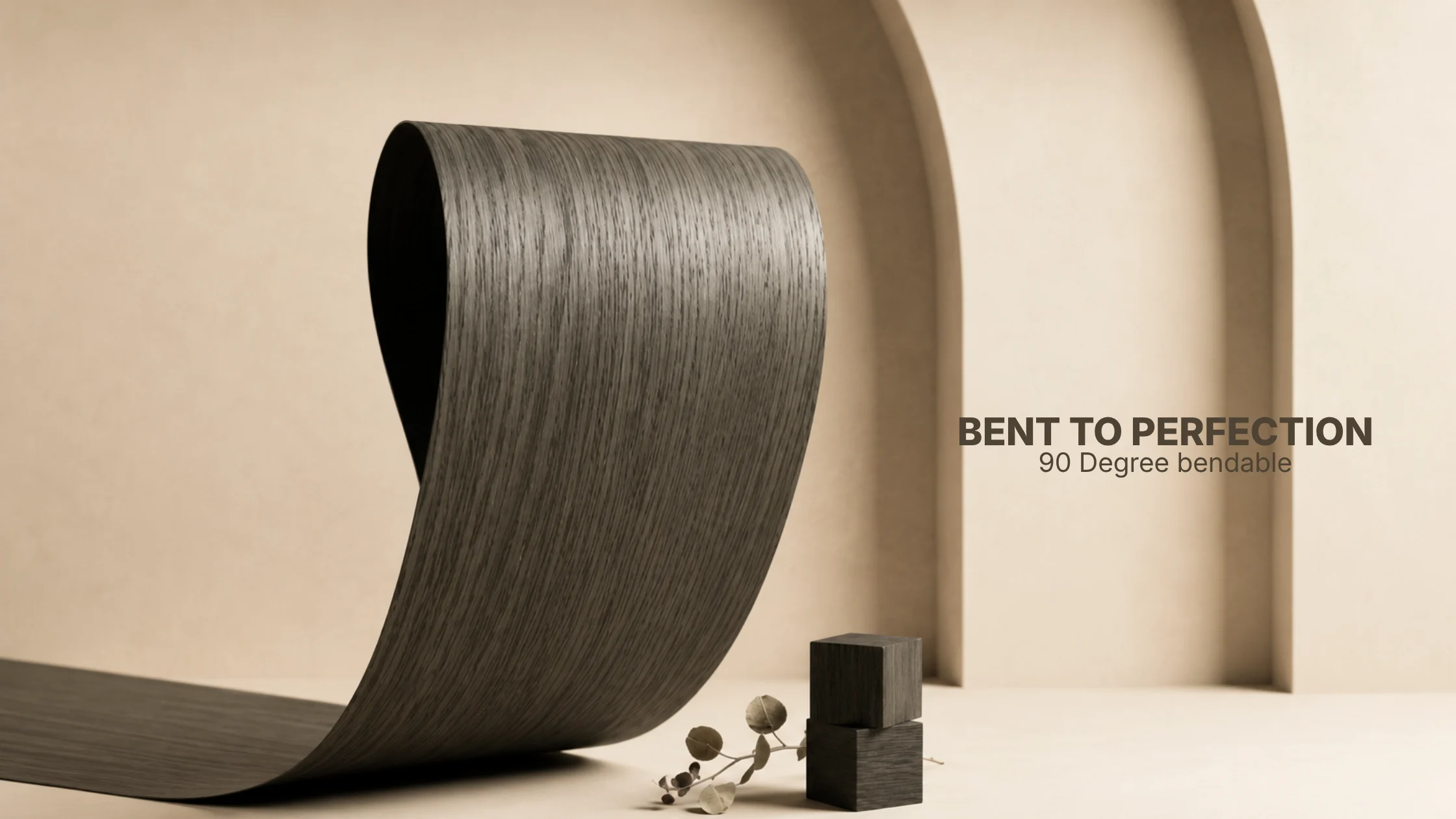
ONEDTL bends to 90° at room temperature without cracking. The AVC Copolymer base provides inherent flexibility that HPL cannot replicate.
Electron Beam (EB) curing technology gives the ONEDTL surface thermal healing properties. Minor scratches are eliminated with a cloth and a hairdryer. This is a surface property, not a coating.
ONEDTL is backed by a written 10-year anti-fade warranty. UV- and heat-resistant pigments maintain colour integrity under prolonged exposure to indirect sunlight.
The Sustainability Case
ONEDTL Thermolaminate is India's first laminate to hold Green Pro certification, the country's most rigorous green product standard. It is VOC-free, carries an E0 emission rating (zero formaldehyde emission), and contains no paper, urea or phenol. For architects specifying LEED-rated projects or clients who prioritise indoor air quality, ONEDTL is the only laminate that meets this standard.
Specification Notes
ONEDTL is available in 1mm thickness across 8'×4' and 10'×4' sheet sizes, in 150+ SKUs across Super Matte, Full Gloss, Solid Textured and Printed Textured finishes. Matching edge bands (ONEDTLEdge) are manufactured for every design. Full technical data sheets, ASTM E84 fire certification, Green Pro certification, and weather-resistance test reports are available at designtree.com.
Conclusion
The shift from HPL to thermolaminate in India is not a trend. It is a material category upgrade that answers five decades of unresolved frustrations in surface specification. ONEDTL Thermolaminate is available pan-India. Free sample kits are available for architects and specifiers at designtree.com.